Solitaire 3D Fish
- 4.6
- Rating
- 10.00M
- Installs
- Free
- Price
 Analysis by App-foxy
I usually turn to a solitaire game when I want something quiet enough for a short break but engaging enough to keep my attention. Solitaire 3D Fish fits that mood with a card-focused format from Playdayy, built around familiar solitaire play and a more playful presentation than a plain digital deck. I found it easy to understand within minutes, yet it still gives each session a small sense of purpose instead of feeling like an endless stack of identical hands.
The game is free to download and is suitable for Everyone, which makes it approachable for casual players, older users who enjoy traditional card games, and anyone looking for a low-pressure way to fill a few spare minutes. Its store summary points toward relaxation and brain training, and that is a fair description of the experience: I would not treat it as serious mental training, but it does reward observation, memory of available moves, and patience.
How the game turns simple solitaire into a longer routine
I find that the longer routine works best when I give each round a small purpose—practising a more careful scan of the layout, for example, rather than simply tapping through moves. That keeps repeated play from becoming automatic and makes it easier to stop when the break is over. It also sets up the household question: what changes when more than one person uses the same device?
You May Also Like

 Pandora - Music & Podcasts
Pandora’s Music Is Easy to Start, but Harder to Recover
Pandora’s strength is its low-effort path from a seed to a station. Its weak spot is how much confidence it asks you to place in connection, setup, and quiet recovery.

 8 Ball Pool
 Is Built on Rivalries, Rematches, and Routine
A close look at the rivalries, rematches, shared routines, and unanswered safety questions that turn a quick pool match into a persistent mobile community.

 Samsung Music
’s Quiet Strength Is Playing What You Already Own
Its reach comes less from spectacle than from dependable access to a personal library. That simplicity is both the app’s strongest retention engine and its ceiling.

 AccuWeather: Weather Radar
AccuWeather Review: A Quick, Clear Forecast for Everyday Decisions
For everyday plans, the best forecast is the one you can understand quickly. AccuWeather makes rain timing, radar, and local conditions easy to act on, with a few trade-offs.

 Hill Climb Racing
Why Hill Climb Racing Still Turns Crashes Into One More Run
A tiny car, a bumpy hill and one more upgrade: Hill Climb Racing keeps resurfacing because its simple chaos makes every near-miss feel personal.

 AliExpress - Shopping App
AliExpress Makes Global Shopping Feel Personal, but Shoppers Bear the Risk
AliExpress turns a global marketplace into a pocket-sized discovery engine. Its reach is useful, its shopping loop compelling, and its trade-offs easy to miss.
More From Our News Desk
View All News


The first goals are clear without being overwhelming
The strongest part of the opening is its simplicity. I do not need to learn a complicated control scheme or understand a large set of rules before playing. The familiar card structure gives me an immediate objective: reveal useful cards, make legal moves, and work toward clearing the layout. That clarity matters on a phone, where I may only have a few minutes and do not want a tutorial to become the main event.
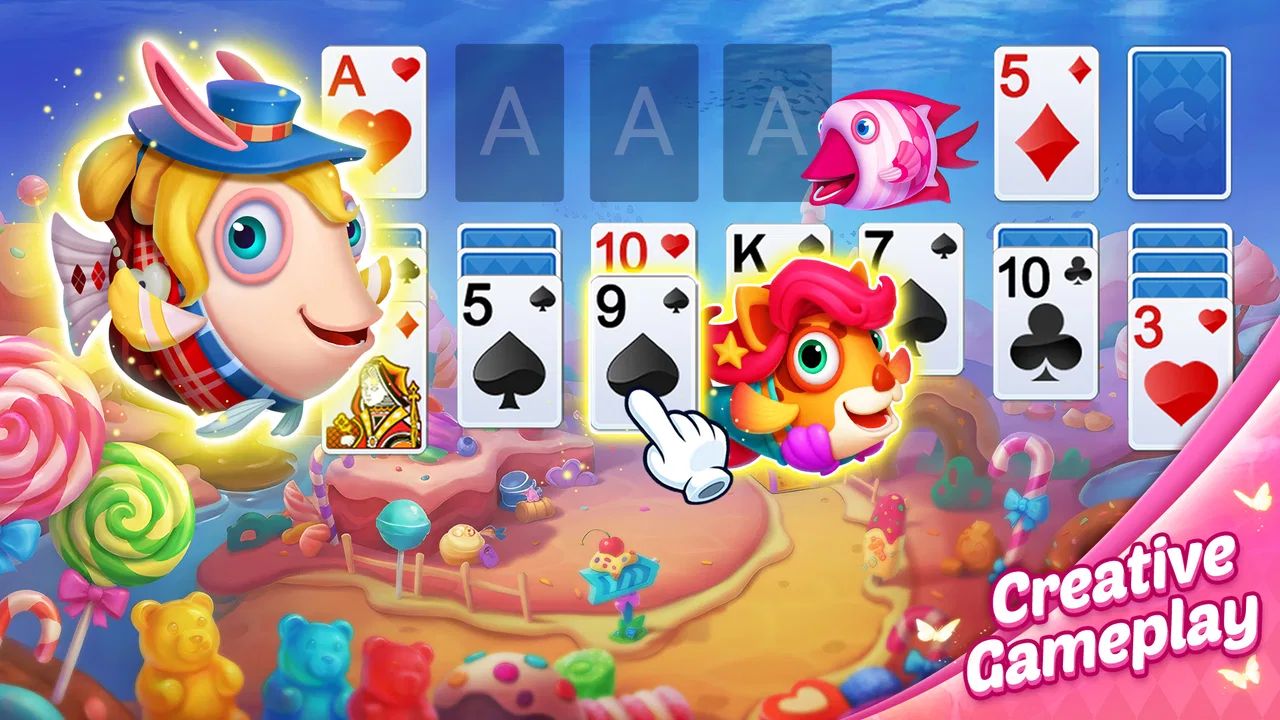
The three-dimensional presentation gives the traditional format a more game-like identity. It is not enough to change the underlying card rules, but it does make the experience feel less like opening a static utility and more like entering a small recreational space. For me, that visual framing works best when I want solitaire to feel relaxing rather than strictly functional.
Early goals in a game like this need to be modest. Clearing a layout, finding a better sequence of moves, and finishing a session are satisfying because they are understandable immediately. I appreciate that the basic loop does not require me to commit to a long play period. A quick round can stand on its own, while a longer session naturally develops when I am in the mood for more.
One useful habit is to avoid playing the first available move automatically. I get better results when I pause for a moment and check whether moving one card will expose another option or block the column I need later. That small change makes the game feel more thoughtful without turning it into a demanding strategy title. It is also where the “train your brain” idea has the most practical value: the game encourages planning, but it remains accessible.
Progress feels best when I treat each round as a small test
Solitaire does not usually provide the dramatic progression of a role-playing game, and this title is most enjoyable when I do not expect it to. Its appeal comes from the repeated cycle of starting a layout, spotting possibilities, recovering from awkward positions, and eventually completing or abandoning the attempt. The progress signal is therefore personal as much as visual: I notice when I make fewer careless moves or recognize a useful sequence earlier.
That makes the game a good fit for short daily routines. I can play while waiting for an appointment, during a quiet commute when it is safe to do so, or at the end of the day when I want something more active than scrolling but less demanding than a competitive game. The session structure supports stopping naturally. I do not feel that I must reserve a large block of time just to make meaningful progress.
My advice is to use the first few rounds to learn your own decision-making habits rather than chasing perfect play. If I rush, I tend to reveal cards without considering what that does to the rest of the layout. If I slow down slightly, the same familiar rules become more satisfying. This is a concrete advantage over purely passive entertainment: the game gives me something small to solve, even when the stakes are low.
The broader audience response also suggests that this format has lasting appeal. The game has an average rating of 4.6 from around 721 thousand ratings, and it has passed 10 million installs. Those figures do not guarantee that every player will enjoy the presentation, but they do show that the basic idea connects with a large casual audience.
The difficulty curve depends more on decisions than spectacle
I would describe the challenge as gradual in the way a good solitaire session is gradual. The rules are easy to grasp, but the number of possible choices can make later decisions less obvious. A move that looks helpful can remove flexibility, while a move that seems less urgent may open a better route. That tension gives the game more depth than its relaxed appearance first suggests.
Players who already know solitaire will probably understand the fundamentals immediately. The challenge for them is not learning the rules; it is maintaining discipline. I have to resist emptying a column simply because I can, especially when doing so may limit the cards available for later rearrangement. New players, meanwhile, can learn through repetition without being forced to study a detailed manual.
The game is not the right choice if I want a sharply competitive difficulty ladder, precise esports-style balance, or a constant stream of high-intensity challenges. Solitaire works through quiet problem solving, and its difficulty can feel uneven because the layout itself influences how interesting a round becomes. Some sessions are satisfying puzzles, while others are resolved quickly or become difficult for reasons that feel more structural than skill-based.
That variability is not necessarily a flaw. It is part of why I can play without feeling exhausted. Still, anyone seeking a tightly controlled challenge should consider a more specialized solitaire alternative with extensive rule customization or competitive scoring. This version is better suited to players who value atmosphere and convenience over deep control of every game parameter.
Visual pacing helps, but it can also distract from the cards
The three-dimensional style is the clearest way this game separates itself from a basic solitaire app. I like the extra personality when I am playing casually, because it makes the familiar card activity feel more like a small game world. The trade-off is that visual decoration can sometimes compete with the information I actually need: card ranks, suits, available spaces, and the next sensible move.
For that reason, I find it most comfortable to play when I am not rushing. A short pause before tapping helps me read the layout instead of reacting to animation or presentation. On a smaller phone screen, that habit becomes even more useful. Solitaire already requires careful visual scanning, so a player who prefers a very plain interface may find a traditional card app easier to read.
The pacing is also different from a conventional board or action game. There are no reflex demands in the core card activity, so the game gives me room to think. That makes it suitable for winding down, but it may feel slow to anyone who needs constant novelty. I see the presentation as a bonus rather than the main reason to install it: the card decisions must still carry the experience.
What keeps me returning, and where the pressure may appear
The retention strength comes from how little preparation each session requires. I can open the game, begin a round, and stop when I am done. Familiar rules reduce friction, while the possibility of a better sequence gives me a reason to try again after a disappointing result. That loop is effective because it does not demand a large emotional investment.
There is also a useful distinction between healthy repetition and pressure. I enjoy returning when I am trying to improve my patience or complete one more layout. I enjoy it less when a game starts making progress feel like something I must protect or purchase. Because this is a free game with in-app purchases ranging from $0.99 to $109.99 per item, I would approach optional spending carefully and decide in advance whether I want the free experience only or am comfortable paying for extras that may appear during play.
That price range is important for families. The Everyone age rating makes the content broadly approachable, but an age rating does not replace sensible control of purchases on a shared device. I would set up purchase safeguards before handing the phone to a child or another family member. Adults who simply want free solitaire should also remember that “free” describes the download, not necessarily every optional element encountered during continued play.
For me, the best way to avoid retention pressure is to define a session before I start. One or two rounds is enough for a break, and I do not need to chase every possible reward or continue after the game stops feeling relaxing. That approach preserves the strongest quality of the title: it remains a convenient pastime rather than becoming another obligation.
A practical everyday scenario
Imagine having ten quiet minutes before leaving for work. I can start a round, focus on the layout, and use the time for a small mental reset instead of opening a social feed. If the round ends quickly, I have still had a complete activity. If it becomes more involved, I can stop at a natural point and return later when convenient. That flexibility is more valuable to me than a long campaign because it matches the fragmented way many people use their phones.
At night, the same format can work as a calmer alternative to competitive games. I am not chasing another player, reacting to a timer, or managing a complicated inventory. The card layout gives my mind a narrow problem to consider, which can be a welcome change after a busy day. Players who find even quiet puzzles stimulating before sleep may prefer a non-interactive activity instead, but for me the slower pace is generally comfortable.
It can also suit someone returning to mobile games after a long break. The familiar rules provide a gentle entry point, and the presentation adds enough character to avoid feeling like a spreadsheet. I would recommend it to a friend who wants a casual card game with some visual flavor, especially if that friend values short sessions more than elaborate progression systems.
How it compares with plain solitaire and other card games
Compared with a basic solitaire utility, this game feels more inviting and game-oriented. A plain alternative may be preferable when I want the fastest possible loading, the least visual distraction, or maximum control over rules and display. The advantage here is atmosphere: the three-dimensional identity makes the familiar format feel more like entertainment than a digital replacement for a physical deck.
Compared with competitive card games, it is much less stressful. I do not need to build a deck, memorize a large collection of effects, or compete against an opponent’s unpredictable decisions. That makes it easier to recommend to casual players, but it also means the experience may not satisfy someone looking for social interaction, strategic variety between matches, or a strong sense of mastery over other players.
Compared with puzzle games, the challenge is more open-ended and less scripted. I am working with card relationships rather than solving a designed sequence of logic levels. This creates a familiar rhythm, though it can also make the experience feel repetitive sooner than a game with a constantly changing puzzle structure. The choice comes down to whether I want a dependable card routine or a more varied stream of bespoke challenges.
Device fit, access, and day-to-day practicality
The current version is 1.0.126, and the game supports devices running Android 6.0 or later. That gives it a broad compatibility range for Android users, including people who do not own a recent phone. I would still judge the visual comfort on the particular screen being used, because card readability matters more here than raw performance.
Since the game is free, trying it carries little initial commitment. The developer is Playdayy, and the title sits clearly in the card-game category rather than pretending to offer a larger genre mix. That focus is helpful: I know what I am installing, and I can decide quickly whether its style suits my preferred way of relaxing.
One practical tip is to play with a stable grip and enough screen brightness to distinguish suits comfortably, especially during longer sessions. That sounds basic, but solitaire depends on accurate visual recognition. If I am tired or the display is hard to read, I make poor choices for reasons unrelated to strategy. A clean, comfortable setup improves the experience more than trying to play faster.
Who should install it, and who should skip it
I would recommend it to people who already enjoy solitaire, want a casual card game for short breaks, or prefer a relaxed solo activity over competitive mobile games. It is particularly suitable for players who like familiar rules presented with more personality than a bare-bones card table. The broad age rating also makes it easy to consider for a mixed household, provided purchase controls are handled responsibly.
I would be more cautious about recommending it to someone who dislikes repeated card layouts or expects a deep story, multiplayer competition, or a highly customizable ruleset. The three-dimensional presentation may also be unnecessary for players who see solitaire as a tool rather than entertainment. In those cases, a simpler alternative could be faster, clearer, and less distracting.
Players sensitive to optional purchase prompts should decide their boundaries before playing. The free entry is appealing, but the presence of in-app purchases means the experience should be approached like a free-to-start mobile game, not like a completely unrestricted traditional deck of cards. I can enjoy it without spending, but I would not install it for a child on a shared device without first checking the device’s purchase settings.
My progression verdict after looking at the full loop
The progression works best as a gentle reason to return, not as a substitute for a full campaign. Early goals are understandable, progress is felt through improved choices and completed rounds, and the difficulty comes from managing the layout rather than mastering complicated systems. That combination gives the game a comfortable rhythm for casual play.
Its main limitation is also central to its identity: solitaire remains solitaire. The presentation can make the routine more attractive, but it cannot remove the repetition that some players will eventually notice. I also think the in-app purchase range deserves awareness, particularly for families and anyone who wants a strictly distraction-free free experience.
Overall, I see this as a pleasant option for a quiet card break. I would choose it over a plain solitaire app when I want more visual character, and I would choose a different game when I need social competition, a stronger narrative, or a more demanding progression system. For the right player, its success is simple: it makes familiar card decisions easy to start, comfortable to repeat, and just thoughtful enough to keep a short break from feeling empty.
FAQs for Solitaire 3D Fish
01What is Solitaire 3D Fish and how does it differ from traditional solitaire games?
Solitaire 3D Fish is a unique twist on the classic solitaire card game, offering a visually immersive experience with 3D graphics and an engaging aquatic theme. Unlike traditional solitaire, this version features vibrant underwater environments and interactive fish that players can collect and customize. It combines classic gameplay with a relaxing, visually appealing atmosphere.
02Is Solitaire 3D Fish free to play, and are there any in-app purchases?
Solitaire 3D Fish is free to download and play. However, it does offer in-app purchases for players who wish to enhance their experience. These purchases can include additional fish, decorative items, and other premium features. While the game is enjoyable without spending money, these options are available for those looking to personalize their gameplay further.
03What kind of devices are compatible with Solitaire 3D Fish?
Solitaire 3D Fish is available on both Android and iOS platforms, making it accessible to a wide range of devices. It requires a relatively modern operating system to ensure smooth performance, so users should check the app store for specific OS version requirements. The game is optimized for both smartphones and tablets, providing great flexibility in how you choose to play.
04How does the game progress and what are the main objectives in Solitaire 3D Fish?
The primary objective of Solitaire 3D Fish is to complete solitaire card games while building and decorating your own aquarium. As players progress through levels, they unlock new fish and decorations. The game encourages strategic thinking, as players must clear card stacks to advance. Completing levels also earns coins and rewards, which can be used to enhance the aquarium environment.
05Are there any social features in Solitaire 3D Fish that allow interaction with friends?
Yes, Solitaire 3D Fish includes social features that allow players to connect with friends. Players can share their aquarium progress, compete on leaderboards, and send gifts. These features enhance the social experience and provide a sense of community as players can compare their progress and achievements with others, making the game more engaging and interactive.
Pros
- Engaging 3D graphics enhance gameplay.
- Variety of card designs to choose from.
- Daily challenges keep things fresh.
- Easy to navigate interface.
- Offline play available.
Cons
- Ads can be frequent and intrusive.
- In-app purchases are costly.
- Limited customization options.
- Occasional bugs with animations.
- Requires substantial device storage.

Solitaire 3D Fish
Gallery